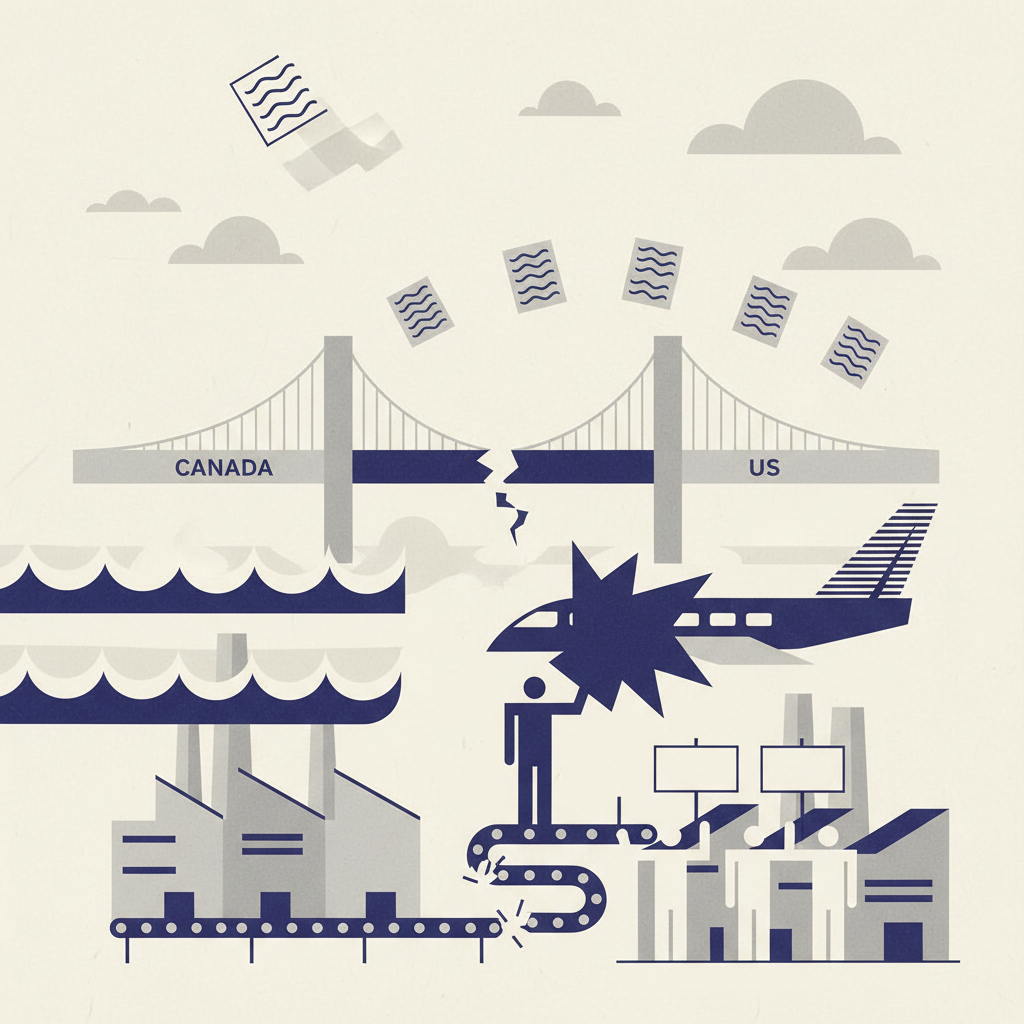
Canadian tariffs have taken effect, moving the trade measure from announcement to implementation. Attention now turns to how the policy is applied and whether it prompts further action.
For workers, employers and consumers, the practical effects will depend on the goods covered, the tariff rates, how long the measures remain in place and whether businesses change their purchasing or production decisions. Those details determine where added costs first appear and whether companies absorb them, pass them along or adjust their operations.
The key policy distinction is that the Canadian tariffs are now in force. That separates them from proposals or warnings that have not yet become binding government action. Formal implementation details, including the products covered and any exceptions, will be central to evaluating the measure’s reach.
Trump raises a threat against Bombardier
Trump has separately threatened Bombardier. A threat can signal that an administration is considering action, but it is not the same as a completed policy step.
The next questions are whether Trump identifies a specific measure, which part of the federal government would carry it out and what process would apply. Any formal action could come with a written directive, agency notice or other public record defining its scope and timing.
The distinction matters because businesses make decisions around measures that are in force as well as the possibility of future changes. Until a threat becomes a defined action, its practical consequences remain tied to what the administration decides to do next.
The Bombardier issue and the Canadian tariffs are related to the broader economy-and-jobs debate, but they are distinct developments. One concerns tariffs that have taken effect; the other concerns a threat that may or may not lead to a separate government action.
What the trade developments mean for the public
Tariff debates can involve several stages: an announcement, publication of formal terms, an effective date, enforcement and possible changes or exemptions. Canada’s tariffs have reached the effective stage. Trump’s Bombardier threat has not been described as an implemented measure.
For the public, the most useful indicators will be official documents defining which goods or companies are affected, when any new requirements begin and which government body is responsible. Business responses may also show whether employers alter supply arrangements, production plans or staffing decisions.
Those developments should be evaluated separately from political statements. A tariff already in force can be examined through its written terms. A proposed or threatened action becomes measurable once the government states what it will do and begins the required process.
White House hosts 9/11 remembrance
Alongside the trade developments, the White House is hosting a 9/11 remembrance. The event marks a separate part of the day’s public schedule and is not a trade-policy action.
The remembrance places the focus on 9/11 while the administration also faces questions about tariffs and the threat involving Bombardier. Any remarks or actions connected to trade should be distinguished from the purpose of the remembrance itself.
What comes next
The immediate policy focus is implementation of the Canadian tariffs and whether Trump turns his Bombardier threat into a specific federal action. Official notices will establish the scope, legal process and timing of any next step.
For economy-and-jobs questions, the clearest evidence will come from the written tariff terms, subsequent government decisions and documented responses by affected businesses. Those records will show whether the developments remain separate or lead to additional trade measures.
What to watch
•Formal terms and enforcement of the Canadian tariffs
•Whether Trump identifies a specific action involving Bombardier
•Any agency notice or directive setting out the next steps