
News · US
Former Shin Bet chief questions Netanyahu’s motives
Elections and votingA former Shin Bet chief raised questions about Benjamin Netanyahu’s intent as an election approached.
The Ballot National (US) News DeskOct 17, 2026
News · Elections and voting · National (US)
The federal action keeps in place a national emergency concerning foreign interference and public confidence in U.S. elections.
Key takeaways
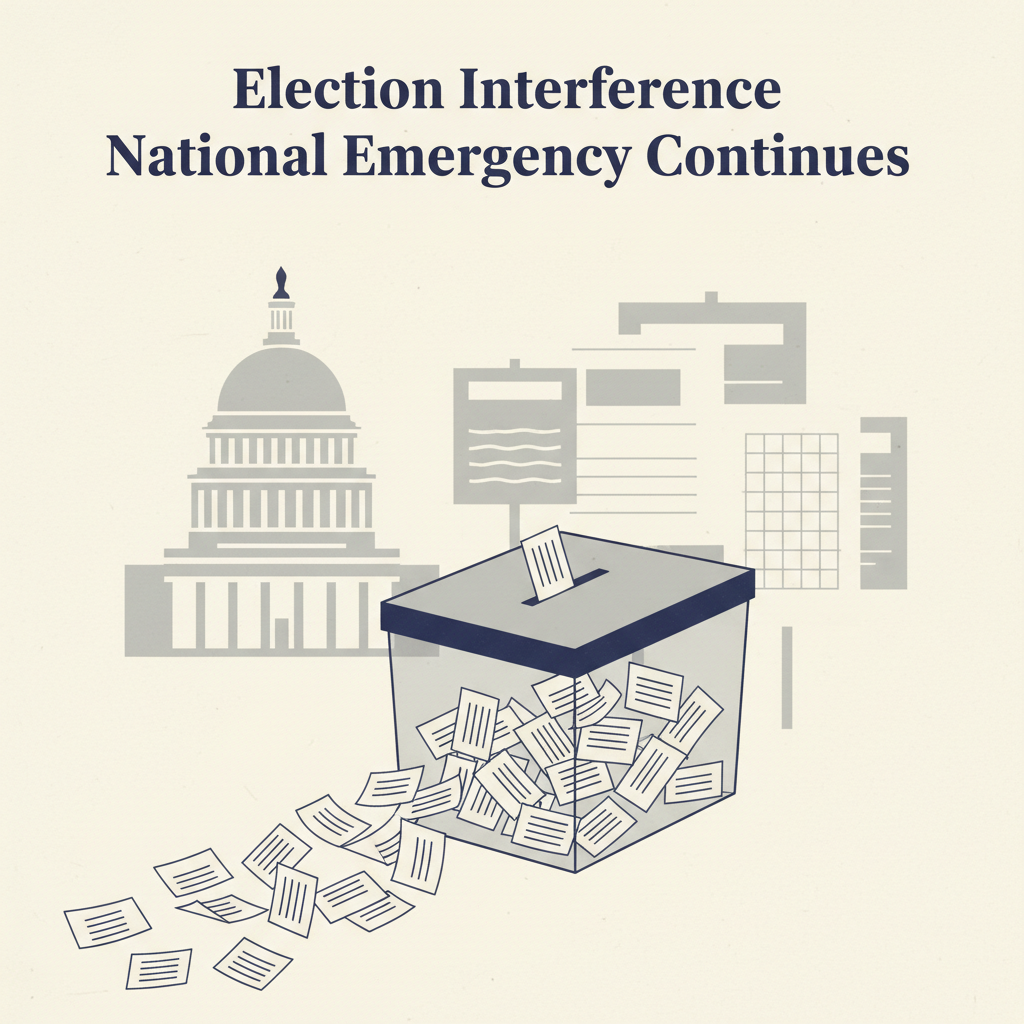
The national emergency concerning foreign interference in U.S. elections and actions that undermine public confidence in those elections is continuing. The action maintains an existing federal policy designation and is not directly linked to a current candidate, campaign or ballot contest.
The continuation addresses two related concerns named in the action: foreign interference in elections and conduct that undermines public confidence in U.S. elections. It does not identify a particular candidate or election as the subject of the continuation.
A continuation means the existing national emergency remains in effect rather than ending. It does not create a separate candidate position, decide an election dispute or change a reported election result.
The action remains focused on the broader national issue stated in its title. That focus distinguishes it from election administration decisions made for a specific contest, such as setting voting procedures, counting ballots or certifying results.
Because no race is directly linked to the action, voters should not read the continuation as a judgment about any named campaign. It is a federal action concerning the integrity of the U.S. election system and public confidence in that system.
Foreign interference refers to the part of the emergency centered on involvement from outside the United States. Undermining public confidence addresses the effect that interference, or related conduct, can have on whether the public trusts U.S. elections.
The wording treats election operations and public confidence as connected but distinct concerns. One deals with interference itself. The other deals with confidence in the election system.
The continuation does not, by itself, name a specific incident, person, country, election office or voting system. It also does not attach the action to a particular federal, state or local election.
For voters, the central point is that the federal government is keeping the existing emergency designation active. The continuation is not a finding that a particular ballot was improperly cast or counted, and it is not a statement about which candidate should hold office.
No candidate has a documented position connected to this action, and no campaign is part of the continuation described here.
Election rules and voting instructions for a specific jurisdiction are separate matters. Voters seeking information about registration, polling places, mail ballots, identification requirements or election results should use the appropriate state or local election office for that contest.
The title identifies the action as a continuation, making the distinction between maintaining an existing emergency and declaring a new one important. The presidential text and its Federal Register publication are the central records for the action and its stated scope.
Any primary records identified in that publication would provide the formal background for the emergency. Later presidential action could address whether it is continued again, changed or ended.
The continuation should therefore be understood narrowly: an existing national emergency concerning foreign interference in U.S. elections and the undermining of public confidence remains in place. It does not resolve a campaign issue, determine a winner or establish a conclusion about any specific election.
What to watch
Was this useful?
News · US
A former Shin Bet chief raised questions about Benjamin Netanyahu’s intent as an election approached.
News · IN
Indiana Secretary of State Morales was not a recipient of correspondence described as “suspicious” and sent to other election officials.
News · US
The 2026 preview identifies the 160th Legislative District but does not name a race, election or candidate.
News · US
Trump’s press operation has drawn attention from Sean Spicer’s first briefing through Katie Zacharia’s sudden departure.