
News · MD
Maryland redistricting ballot gives voters little guidance
Elections and votingThe ballot question does not clearly explain the practical result of voting “yes” or “no” on redistricting.
The Ballot Maryland News DeskOct 18, 2026
News · Elections and voting · Maryland
The Supreme Court of Maryland returned a redistricting referendum to the November ballot, allowing voters to decide the measure.
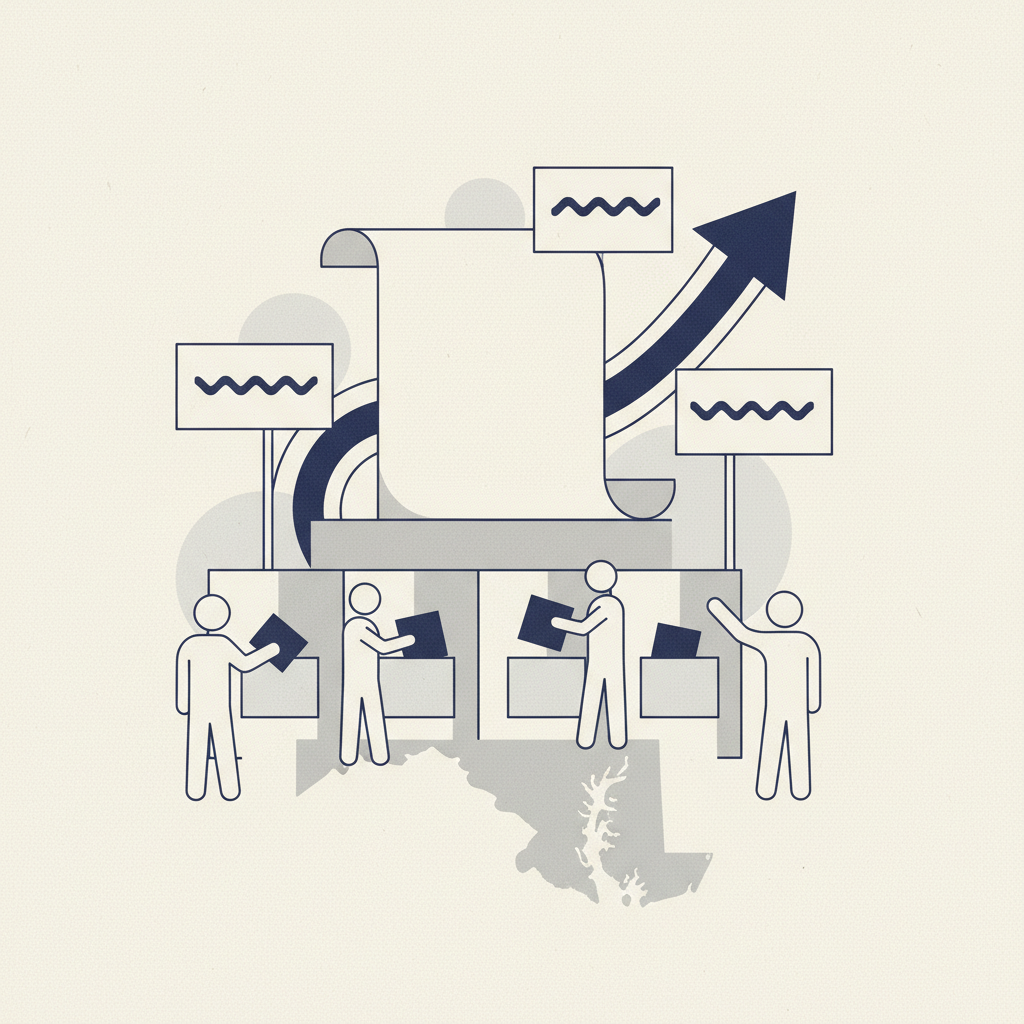
Key takeaways
The Supreme Court of Maryland has restored a redistricting referendum to the November ballot, clearing the way for voters to consider the measure.
The ruling changes the referendum’s ballot status: It had been removed but will now appear before voters in November. The court’s action concerns whether the measure can be presented to voters, not which choice voters should make.
The immediate effect is procedural. Election officials can include the referendum on the November ballot, and voters can cast a vote on it along with the other contests and questions presented to them.
A referendum is a ballot question that asks voters to make a direct decision on a proposal. Unlike a candidate contest, in which voters choose a person for public office, a referendum asks voters to select between the choices printed for a particular measure.
Restoring the question to the ballot does not itself approve or reject the redistricting proposal. That decision remains with voters. The court’s ruling determines access to the ballot; the referendum vote will determine whether the measure receives voter approval.
Redistricting is the process of drawing the boundaries used for elections. Those boundaries determine which voters live in each district and elect representatives together.
Because district lines organize representation, changes to the redistricting process can affect how future election maps are created. The referendum gives Maryland voters a direct role in deciding the proposal placed before them.
The court’s decision should not be read as an instruction to vote for or against the measure. A ruling that restores a referendum to the ballot resolves its eligibility to appear there. Voters still must assess the ballot language and make their own choice.
The referendum will appear as a ballot question rather than as a race between candidates. Voters should read the full wording on their ballot because that language defines the choice being submitted for approval or rejection.
The ballot question’s wording is especially important in a redistricting measure. It tells voters what action a “yes” or “no” vote would take. Before voting, Maryland residents can review their sample ballot and voting instructions so they know how the referendum will be presented.
The high court’s action settles the central ballot-access issue by returning the question to the November ballot. The next formal step is for the referendum to be included in election materials and presented to voters.
Election administrators must prepare ballots and voter information that include the restored referendum. Voters will then have the opportunity to make the final decision at the November election.
The referendum is not directly tied to a candidate race. Its outcome will be determined separately through the votes cast on the ballot question.
Attention now turns to the official ballot text, election guidance and any administrative steps needed to carry out the court’s ruling. Those materials will show voters exactly how the question is phrased and how each voting option is defined.
What to watch
Was this useful?
News · MD
The ballot question does not clearly explain the practical result of voting “yes” or “no” on redistricting.
News · MD
Maryland’s 2026 ballot includes races for governor, attorney general and all eight U.S. House seats.
News · MD
Maryland is adding guardrails for data centers as more states respond to the industry’s fast expansion.
News · MD
Question 3 would ease constitutional limits on congressional maps but would not change districts for the 2026 midterm election.