
Race at a glance
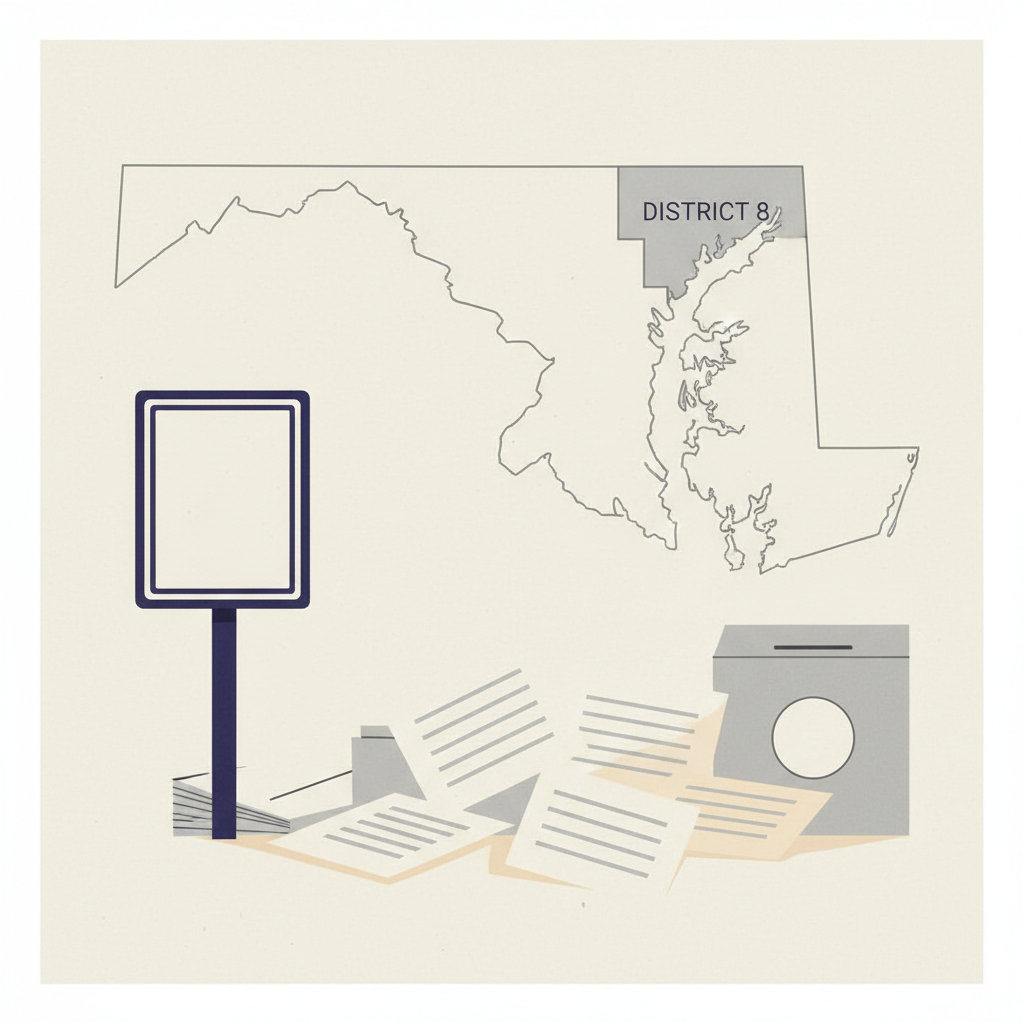
Maryland State House District 8 will have a contested general election on Nov. 3, 2026. The three candidates are Kim Ross, Nick Allen and Harry Bhandari. Each is a Democrat, and each is identified as an incumbent.
That creates a race without a party-label difference among the listed candidates. Instead of comparing a Democrat with a Republican or a candidate from another affiliation, District 8 voters will see three candidates carrying the Democratic label.
The incumbent designation means each candidate already holds elected office. Because that description applies to all three, no candidate is distinguished from the others by incumbency alone. The central choice in the race is among three officeholders from the same party seeking election in the same State House district.
Who is running
Kim Ross, Democrat: Ross is running as an incumbent in the District 8 State House general election. Ross shares the Democratic party label and incumbent designation held by the other two candidates in the field.
Nick Allen, Democrat: Allen is running as an incumbent in the District 8 State House general election. Allen shares the Democratic party label and incumbent designation held by the other two candidates in the field.
Harry Bhandari, Democrat: Bhandari is running as an incumbent in the District 8 State House general election. Bhandari shares the Democratic party label and incumbent designation held by the other two candidates in the field.
All three candidates enter the race with the same two basic ballot identifiers: Democrat and incumbent. That makes the candidates’ names, campaign messages and records important points for voters seeking to distinguish among them as the election approaches.
What is contested
A contested election is one in which voters have more than one candidate to consider. District 8 meets that definition because Ross, Allen and Bhandari are all running in the Nov. 3 general election.
The contest is notable for the makeup of the field. Every listed candidate is a Democrat, and every listed candidate is an incumbent. The ballot therefore does not present a contrast between an incumbent and a challenger or between different party labels among these three candidates.
For first-time voters, “general election” refers to the election that determines who will serve in office, rather than a party primary used to select nominees. District 8 voters participating in the 2026 general election will encounter this race as part of the Nov. 3 ballot.
What happens next
The candidate lineup and ballot presentation are key parts of the process to follow before Election Day. Any change in the field would affect the choices presented to District 8 voters, while the final ballot will establish the names and labels voters see when casting their votes.
Campaign activity will also give voters opportunities to compare the three incumbents directly. Because Ross, Allen and Bhandari have the same party affiliation and incumbent status, distinctions that emerge during the campaign may play a larger role than the basic labels attached to their names.
The fixed date is Nov. 3, 2026. Until then, voters can watch for the final ballot lineup and public campaign appearances involving all three candidates.