News · NE
Nebraska court rejects challenge to medical marijuana law
Elections and votingThe Nebraska Supreme Court turned aside another challenge to the medical marijuana law approved by Nebraska voters.
The Ballot Nebraska Policy DeskSep 13, 2026
News · Elections and voting · National (US)
The message casts Muslim Democrats as leading political adversaries without tying the appeal to a particular candidate, race or policy dispute.
Key takeaways
Republicans are making Muslim Democrats a central target in a midterm campaign appeal, portraying them as leading political enemies. The message is not directly connected to a particular race, election or candidate, and it does not rest on a documented candidate position.
That makes the framing itself the development: Religion and party identity are being used to define who voters should see as an opponent. The appeal asks voters to respond to a broad category of public officials rather than to a named person’s record or a specific proposal on the ballot.
The pitch combines two identifiers — being Muslim and being a Democrat — and treats that combination as a reason for political opposition. It moves beyond disagreement with an individual official by placing multiple people under one adversarial label.
That distinction matters because a person’s religion does not, by itself, establish how that person has voted, what legislation the person supports or how the person would act in office. Party affiliation can indicate a political alignment, but it is not a substitute for examining an individual record or position.
The message also uses the language of enemies. In an election, candidates and parties compete for authority, but voters still must decide among specific choices. Describing a religious and political group as an enemy changes the focus from competition over government decisions to conflict over identity.
The appeal is not directly linked to a named federal, state or local race. There is also no candidate attached whose platform, campaign activity or electoral standing could be evaluated as part of this development.
As a result, the immediate significance is broader than one ballot contest. The pitch can function as a general midterm theme, but its effect in an election would depend on whether campaigns adopt it and how they connect it to named candidates or offices.
Without a specific contest, the message should not be read as evidence about who is ahead, who may win or how voters will respond. It establishes a campaign approach, not an electoral outcome.
No documented candidate stance is tied to the pitch. The message therefore does not give voters a policy comparison involving taxes, spending, public safety, immigration, foreign affairs or any other area of government action.
For voters, the central distinction is between claims about identity and claims about governing. A policy argument can be checked against legislation, public statements, official actions or a campaign platform. A religious label tells voters a person’s faith; it does not establish that person’s complete governing record.
The same standard applies when campaigns criticize any political figure. Voters can look for the named action, proposal or vote behind the criticism and determine whether the characterization matches the record.
The next step is whether the rhetoric appears in identifiable campaign activity, including statements tied to particular candidates or contests. That would show how a broad message is being translated into an electoral argument.
Another question is whether campaigns using the framing identify specific policy disputes or continue to center religious and party identity. Responses from the Muslim Democrats being targeted, as well as from party organizations and individual candidates, could further define how the issue enters the midterm debate.
For now, the pitch is a political message without a directly linked race. Its defining feature is the decision to cast Muslim Democrats collectively as enemies rather than to present voters with a specific candidate comparison or documented policy disagreement.
What to watch
Was this useful?
News · NE
The Nebraska Supreme Court turned aside another challenge to the medical marijuana law approved by Nebraska voters.
News · AK
Alaska has approved the use of baby boxes through a bill expanding the state’s Safe Haven policy.
News · TX
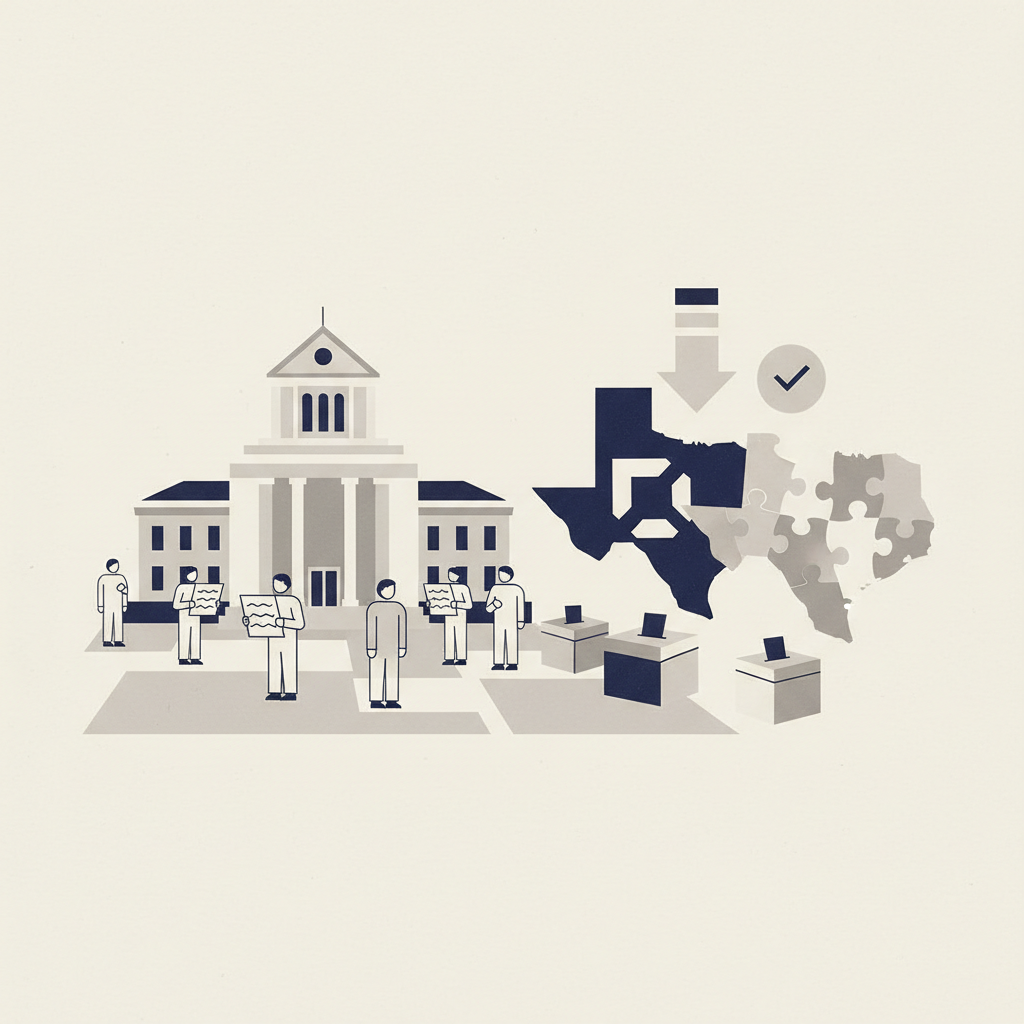
The Texas Supreme Court ruled that Galveston County’s new district maps cannot be used for the November election.
Explainer · ID
A plain-language checklist for confirming election dates, reviewing the ballot, registering and making a voting plan in Idaho.