$2K raised through 2026-06-30
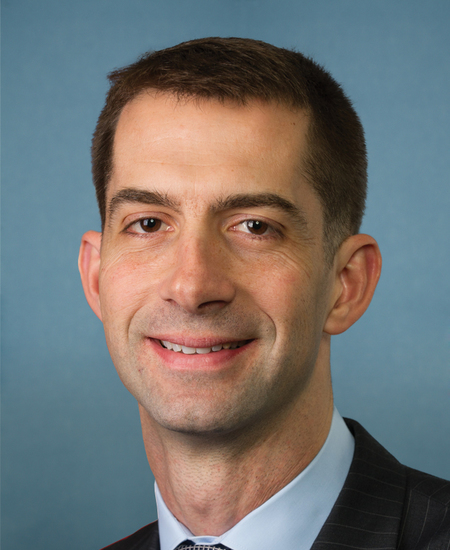
Full profileThomas Cotton is the Republican incumbent in Arkansas’ contested 2026 U.S. Senate race. The general election is scheduled for Nov. 3, 2026, and the field includes 10 candidates across four political labels.
The Arkansas Senate race
Cotton is one of three Republicans in the race. Five candidates are Democrats, one is a Libertarian and one is listed as NON.
Campaign-finance totals show how much each campaign has raised and spent. They do not explain what a candidate believes, how a candidate would vote in office or which issues a candidate would prioritize.
No documented policy positions are on file for any candidate in the race. No candidate biography is on file. Cash-on-hand figures also are not listed.
Candidates and campaign finances
Each candidate’s party label and financial totals are listed below. The figures are presented separately because funds raised minus funds spent should not be treated as a cash-on-hand calculation.
- Jonathan Pittman, Democrat: Pittman’s campaign lists $0 raised and $0 spent. No biography or documented policy positions are on file.
- Micah Ashby, Republican: Ashby’s campaign lists $41,161.53 raised and $126.26 spent. No biography or documented policy positions are on file.
- James Richard MR Iii Russell, Democrat: Russell’s campaign lists $3,086.90 raised and $3,186.90 spent. No biography or documented policy positions are on file.
- Thomas Cotton, Republican: Cotton’s campaign lists $13,601,049.27 raised and $10,066,117.33 spent. No biography or documented policy positions are on file.
- Hallie Shoffner, Democrat: Shoffner’s campaign lists $2,269,113.78 raised and $1,405,535.66 spent. No biography or documented policy positions are on file.
- Jeffrey Francis Wadlin, Libertarian: Wadlin’s campaign lists $28,778.00 raised and $20,309.37 spent. No biography or documented policy positions are on file.
- Daniel Allen Whitfield, Democrat: Whitfield’s campaign lists $2,388.06 raised and $202.85 spent. No biography or documented policy positions are on file.
- Owen Nicholas Carlson, NON: Carlson’s campaign lists $0 raised and $0 spent. No biography or documented policy positions are on file.
- Jeb Little, Republican: Little’s campaign lists $92,531.55 raised and $92,404.15 spent. No biography or documented policy positions are on file.
- Ethan N Sr. Dunbar, Democrat: Dunbar’s campaign lists $17,461.70 raised and $22,253.18 spent. No biography or documented policy positions are on file.
What the figures mean
The listed totals measure campaign fundraising and spending, not public support. They are not poll results, election returns or a forecast of the outcome.
A campaign also can report spending that exceeds its listed fundraising total. The figures alone do not explain the difference, and a candidate’s cash on hand cannot be determined simply by subtracting spending from fundraising. No cash-on-hand amount is on file for any candidate in this race.
The totals vary widely among the 10 candidates. Those differences provide a financial snapshot, but they do not establish a candidate’s background, qualifications or views on public policy.
What voters will decide
Arkansas voters will choose a U.S. senator in the general election on Nov. 3, 2026. Cotton enters the contest as the Republican incumbent, while the other nine candidates are not listed as incumbents.
With no documented policy positions on file, the campaign-finance totals cannot be used to compare where the candidates stand. Future official filings may change the fundraising and spending figures before Election Day.