
News · US
Cruz hears jeers while promoting college sports bill
EducationCruz faced jeers on ESPN’s College GameDay while advocating for a Senate proposal concerning college sports.
The Ballot National (US) News DeskSep 14, 2026
News · Elections and voting · National (US)
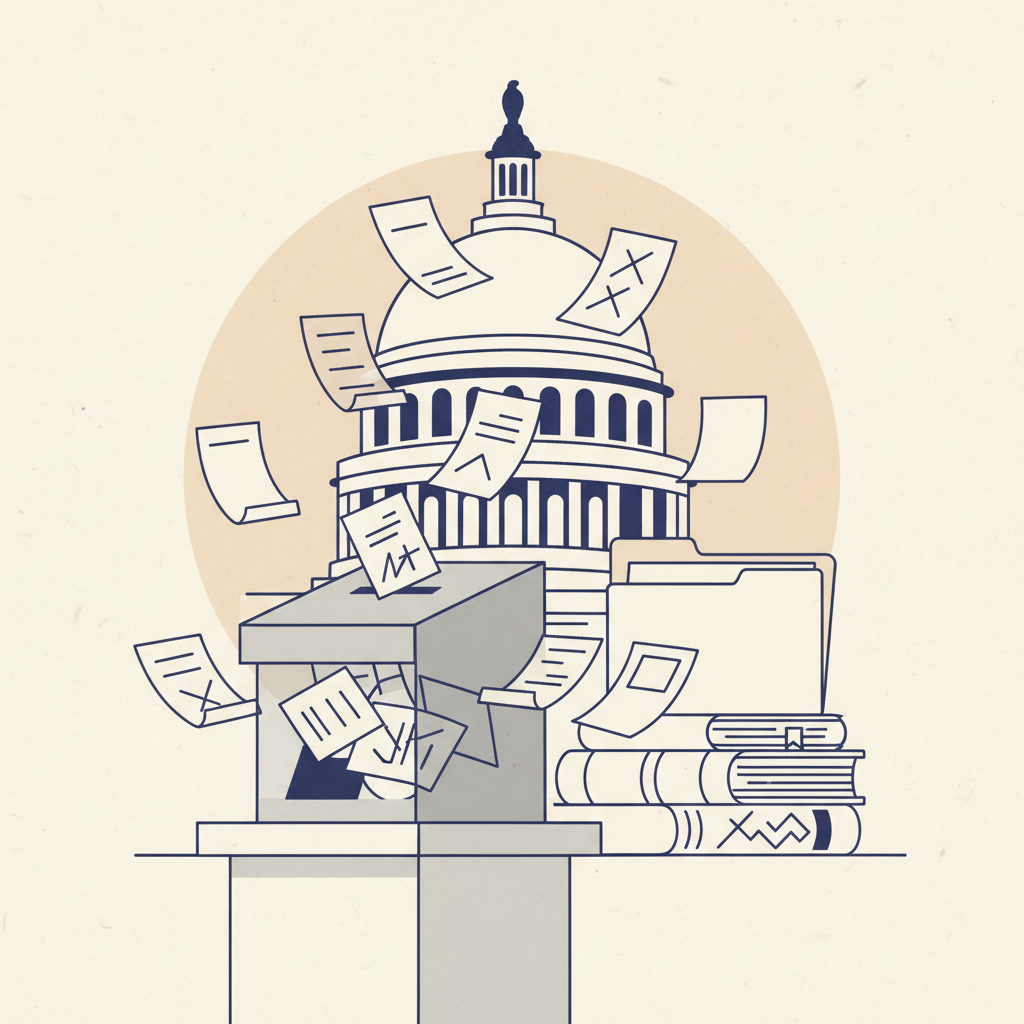
The House approved a short-term measure intended to keep the federal government funded and avoid a shutdown before the election.
Key takeaways
The House has passed a short-term funding bill intended to prevent a federal government shutdown before the election. The measure would temporarily continue federal funding rather than establish a longer-term funding plan.
The development centers on the timing of government funding, not on a candidate or an election contest. No race or candidate is directly linked to the House action.
House passage means one chamber of Congress approved the temporary funding measure. It is an important legislative step, but it is not the same as completion of the full federal lawmaking process.
The measure’s immediate purpose is reflected in its timing: keep funding in place through the period before the election and avoid a shutdown during that time. Because it is a short-term bill, it would postpone rather than settle the broader question of federal funding for a longer period.
Temporary funding measures allow Congress to address an approaching funding deadline without completing a longer-term package at the same time. The length of the extension matters because it determines when lawmakers would again need to address funding.
A federal government shutdown can occur when funding authority expires without a new funding law in place. A temporary funding bill is designed to extend that authority for a limited period.
The House bill’s stated goal is prevention: maintaining funding before the election rather than allowing a lapse. Its practical effect depends on whether it completes the remaining federal process and takes effect before the relevant deadline.
House passage should therefore be understood precisely. The House approved the bill, but that action alone does not describe the measure as enacted law. Additional action is part of determining whether the temporary extension becomes effective.
The election provides the calendar marker for the bill. The measure is intended to prevent a shutdown before voters cast ballots, but it is not itself an election proposal and is not tied directly to a particular campaign.
That distinction matters for voters following the news. The immediate policy question is whether federal funding continues without interruption. Campaign positions, candidate endorsements and election forecasts are separate matters and are not part of this House action.
The short-term approach also means the funding issue would return after the period covered by the bill. The measure does not represent a permanent answer to future government funding decisions.
The central procedural question is whether the bill completes the remaining lawmaking steps in time to prevent a funding lapse. Until that process is complete, House passage remains one stage rather than the final outcome.
The bill’s duration is also important. A temporary extension creates another deadline, and that date shapes when Congress must revisit funding. The exact terms of the measure determine which federal activities are covered and how long the extension lasts.
For the public, the clearest points are straightforward: the House approved a temporary bill, the goal is to avoid a shutdown before the election, and the measure addresses funding only for a limited period. Further action will determine whether that goal is carried out.
What to watch
Was this useful?
News · US
Cruz faced jeers on ESPN’s College GameDay while advocating for a Senate proposal concerning college sports.

News · US
Each White House assertion must be checked separately against legislation, official actions, data and the full context of public remarks.
News · US
The House approved a government funding measure intended to prevent a shutdown ahead of the midterm elections.
News · US
The House approved short-term federal funding intended to prevent a government shutdown before the election.